
Residency Program
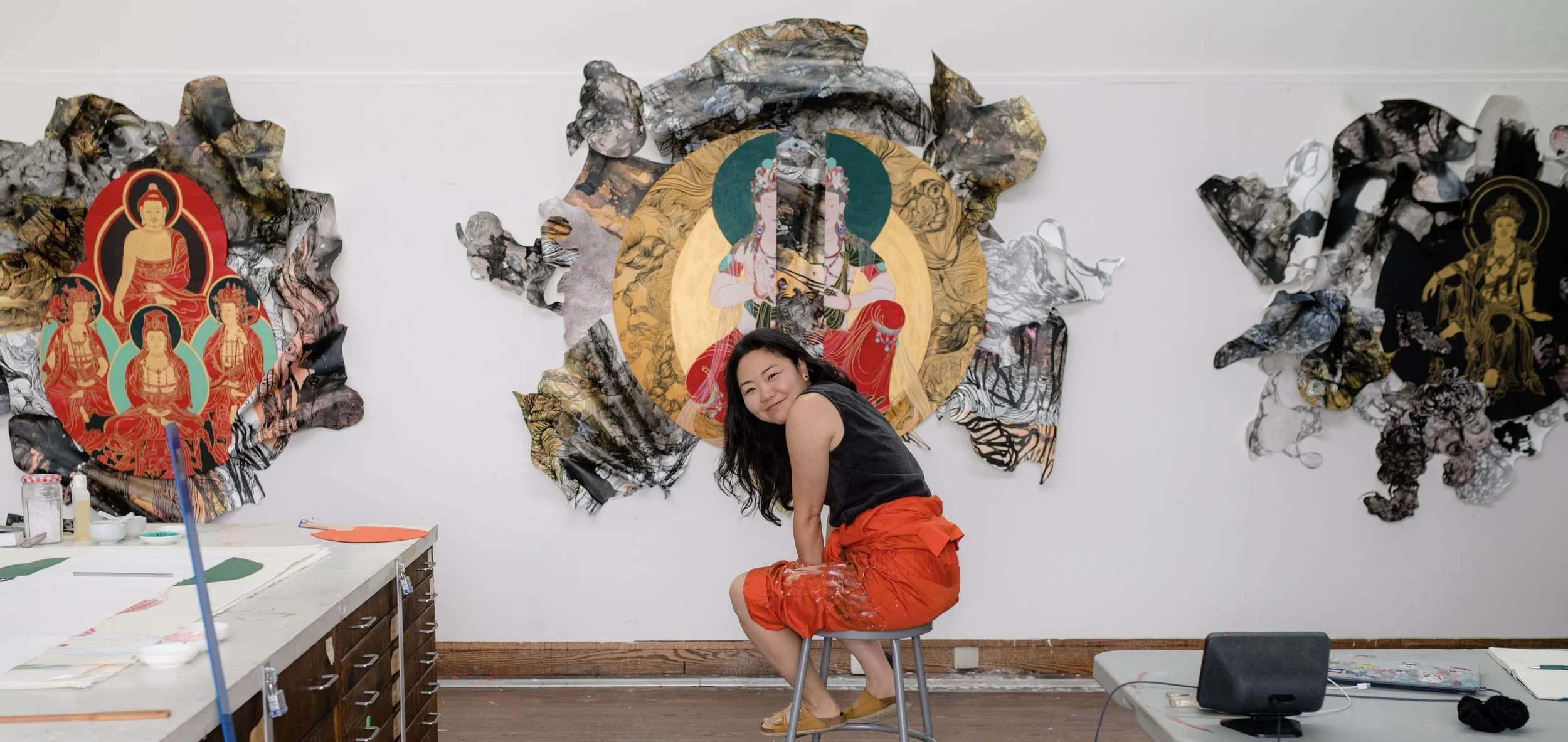
Misoo Bang ’23 in the Hallam Studio. Photo by Heather Henriksen Photography
Overview
Surf Point’s Residency Program launched in September 2019 with the goal of giving time, space, and support to visual artists and arts professionals. Surf Point provides the conditions to step outside of urgency and engage more deeply with one’s work, the surrounding landscape, and a small group of peers. Rather than emphasizing production, the program supports reflection, experimentation, and the possibility of meaningful exchange.
The year-round program offers up to four residents 24 days in live-work spaces within the Surf Point building. Designed as a small, self-directed experience, each session brings together 8 cohorts of artists per year, working across disciplines and perspectives. Residents receive a $3,000 stipend that may be used in any way they need.
Optional activities include gatherings with community members, curator-led museum visits, portrait photography sessions, guided nature walks, and massage. Residents are invited to extend their stay to participate in a public program, such as an open studio or conversation, with an additional honorarium.
Nomination & Selection Process
Artists and art professionals enter the residency program by being nominated by an alum. Residents are then selected by a lottery. Unsolicited applications and nominations are not accepted. Each alum is invited to nominate one individual for a future residency cycle. In some cases, partner organizations and foundations also nominate individuals through sponsorships. Nominators submit a name, contact information, and a brief rationale, and nominees are then invited to complete a short application. No project proposal is required.
All completed applications are entered into a randomized lottery. When needed, the lottery is lightly weighted to ensure that each session reflects a range of practices, backgrounds, and perspectives. Applicants indicate their availability, and placements are made based on lottery results and alignment with session dates. Those not placed remain on an active waitlist for one year in case of cancellations or rescheduling, and may be invited to apply again the following cycle.
This approach allows the program to grow through networks of trust and lived experience. It often reaches artists and arts professionals who may not be connected to major art centers or who may not see themselves reflected in traditional open-call systems. By reducing the administrative demands of large-scale applications, more resources can be directed toward residents and public programs.
Residents are visual artists or arts professionals with an established practice of at least five years, based in the United States, and comfortable participating in a rural, self-directed residency with a small cohort.
As of 2025, Surf Point has welcomed 160 alumni from 26 states. Approximately 65% of residents identify as women or nonbinary, and approximately 58% identify as BIPOC. The acceptance rate is approximately 35%.
Surf Point asks nominators to consider individuals across a range of identities, experiences, and career paths, including:
Visual artists, curators, writers, educators, and arts professionals
People who are thoughtful, generous, and comfortable in a self-directed environment
Those who have had limited access to residency opportunities or may not see themselves reflected in traditional application models
Individuals who contribute to their communities in meaningful ways
Women, BIPOC, LGBTQIA+ individuals, people with disabilities, and those connected to Maine and the broader region
Philosophy
Surf Point de-prioritizes fixed notions of productivity, performance, and urgency in favor of time, attention, and care. Residents are encouraged to shape their own experience, whether that means deep focus, rest, or connection with others.
The program is grounded in the belief that creative work unfolds over time and does not require constant visibility or output. Within a rural setting and without on-site staff, residents are trusted to navigate a largely self-directed experience, with support available as needed. We are committed to fostering a diverse and inclusive community where a range of backgrounds, identities, and practices can coexist and inform one another.
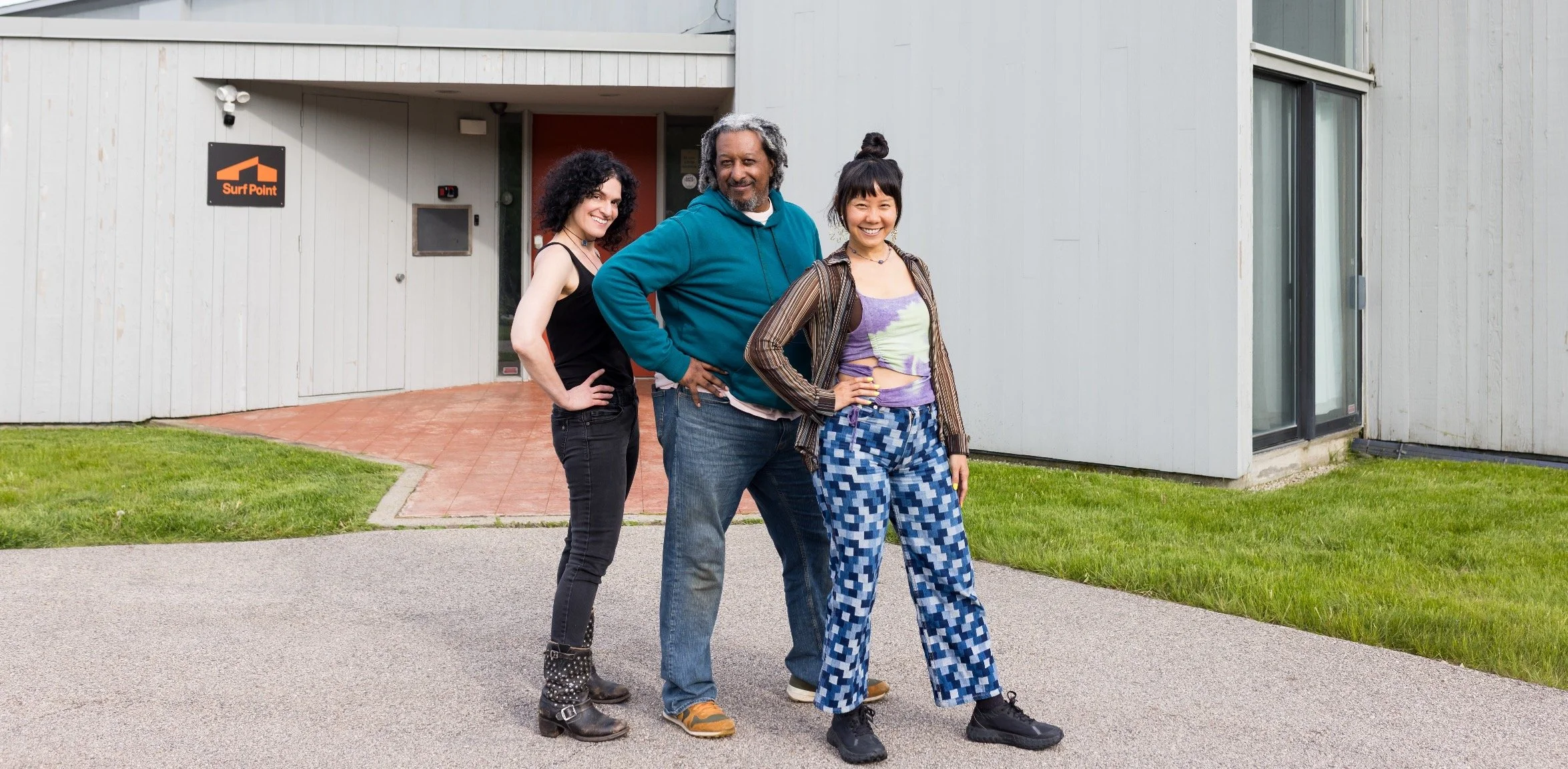
May - June 2025 cohort Lauren Fensterstock, Jamele Wright, Sr., and iris yirei hu in front of Surf Point. Photo by Kerry Constantino